Poem of Pearls
participative installation, St. Elisabeth, Kassel during documenta 15, 2022
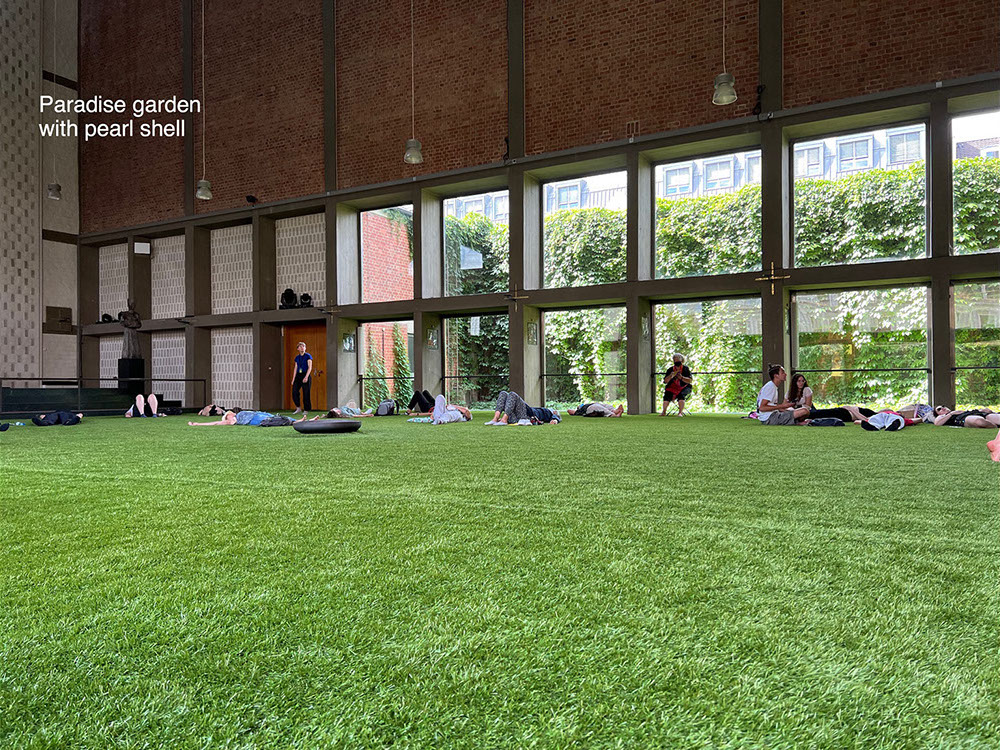
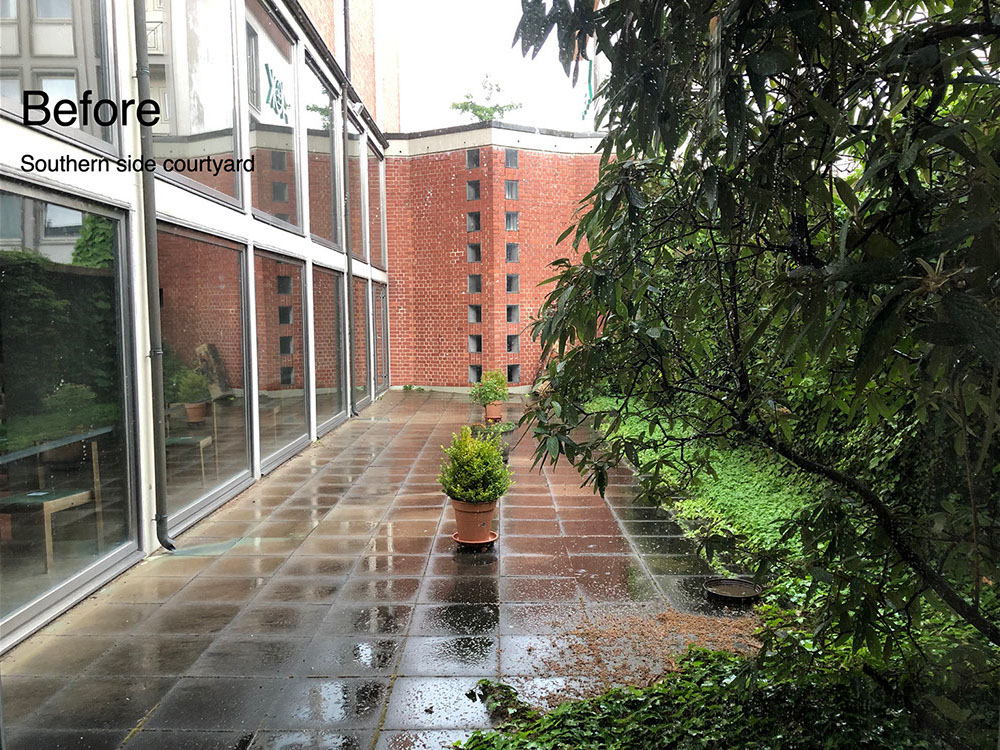
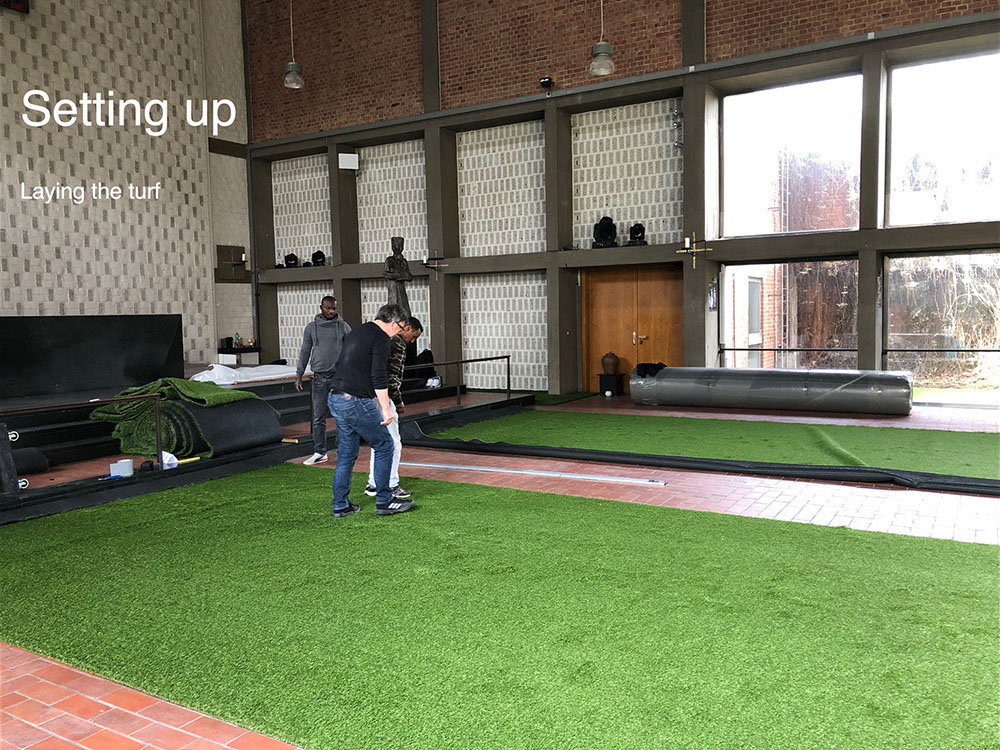
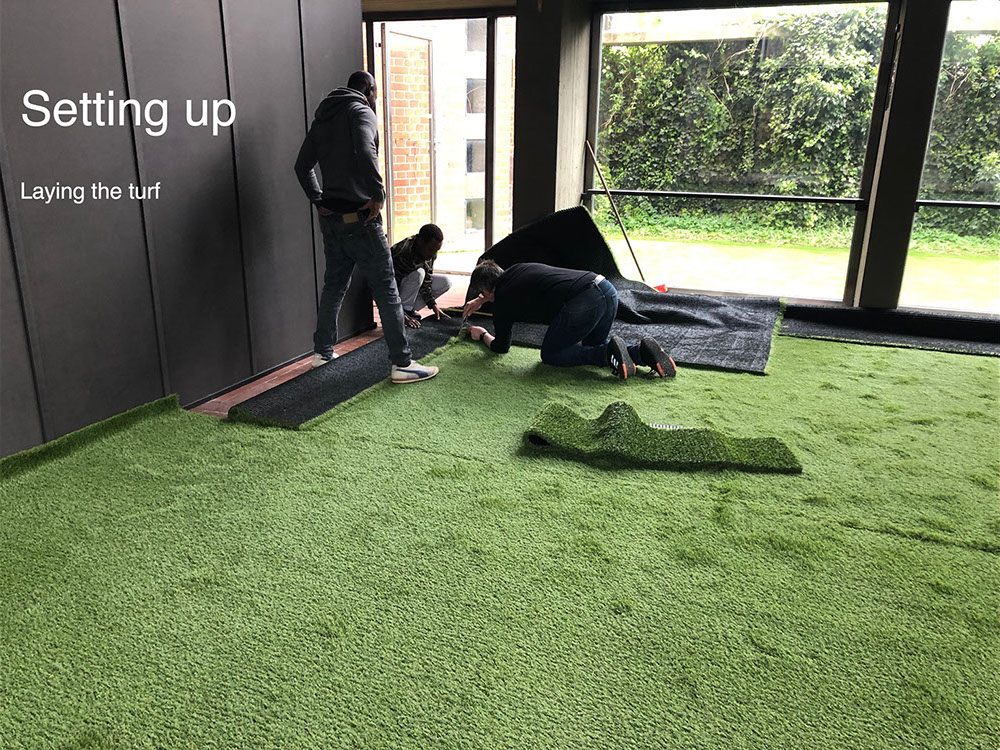
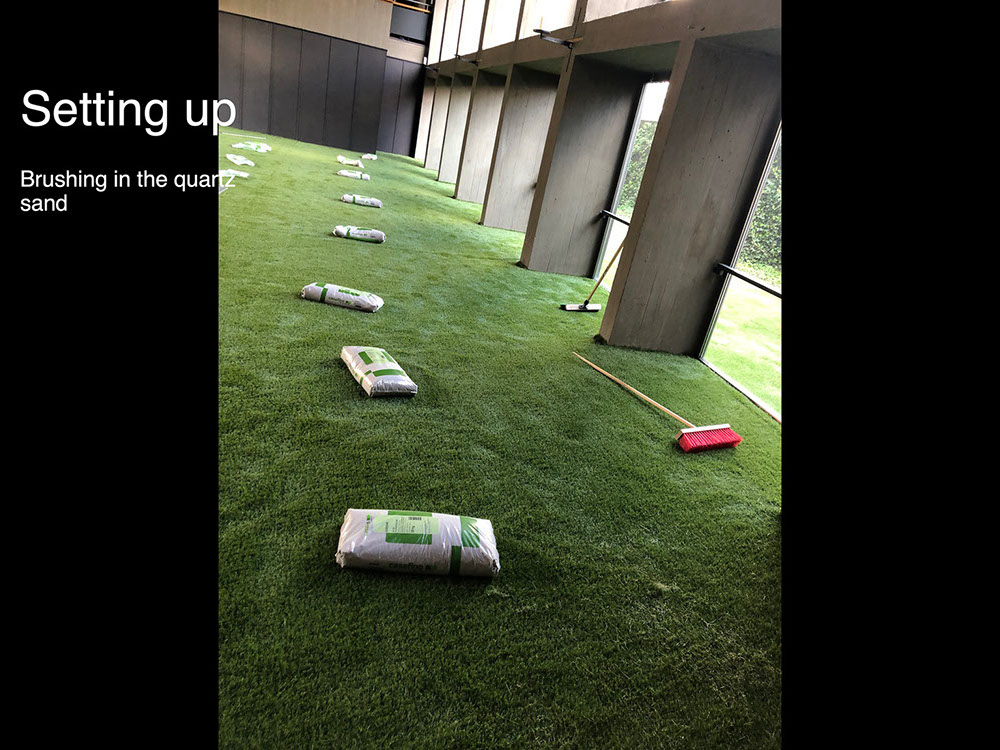
With its large windows overlooking two side courtyards, the Elisabeth Church looks like a basilica with unroofed side aisles. The hortus conclusus, the garden of paradise, is already present in germ. The continuous lawn laid makes it visible and tangible. Artificial turf was deliberately laid, a deceptively real-looking and very high-quality artificial turf, because paradise is also artificial, it comes from our imagination. In paradise there is no becoming and passing away. It is timeless and always the same and more perfect than anything that exists in reality. Similarly, the artificial turf does not change.
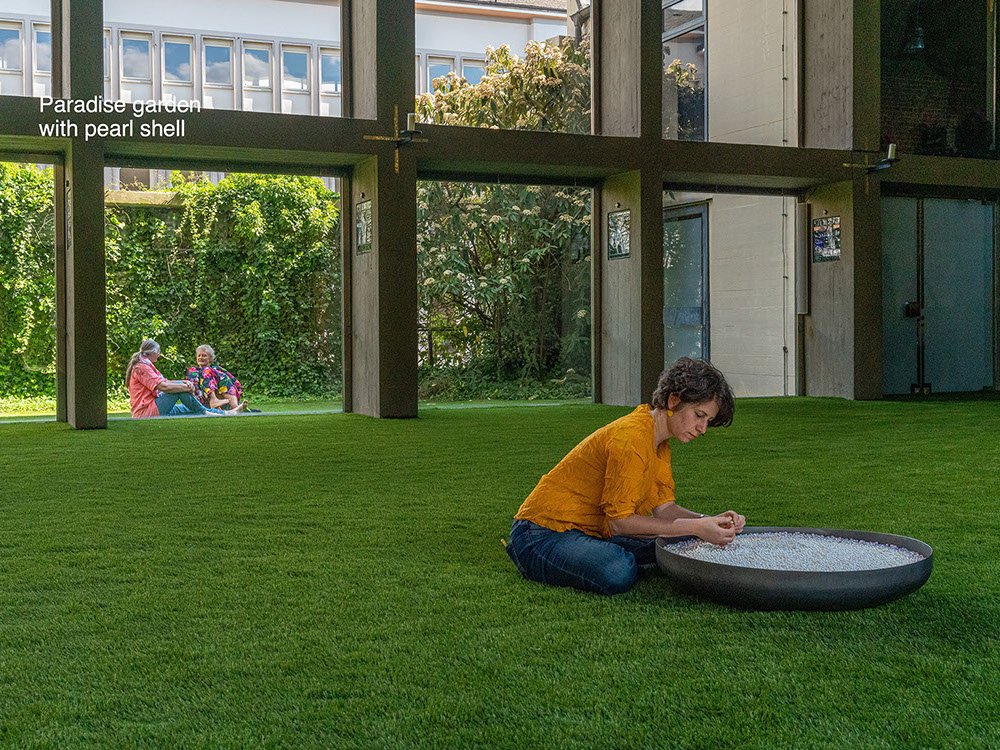
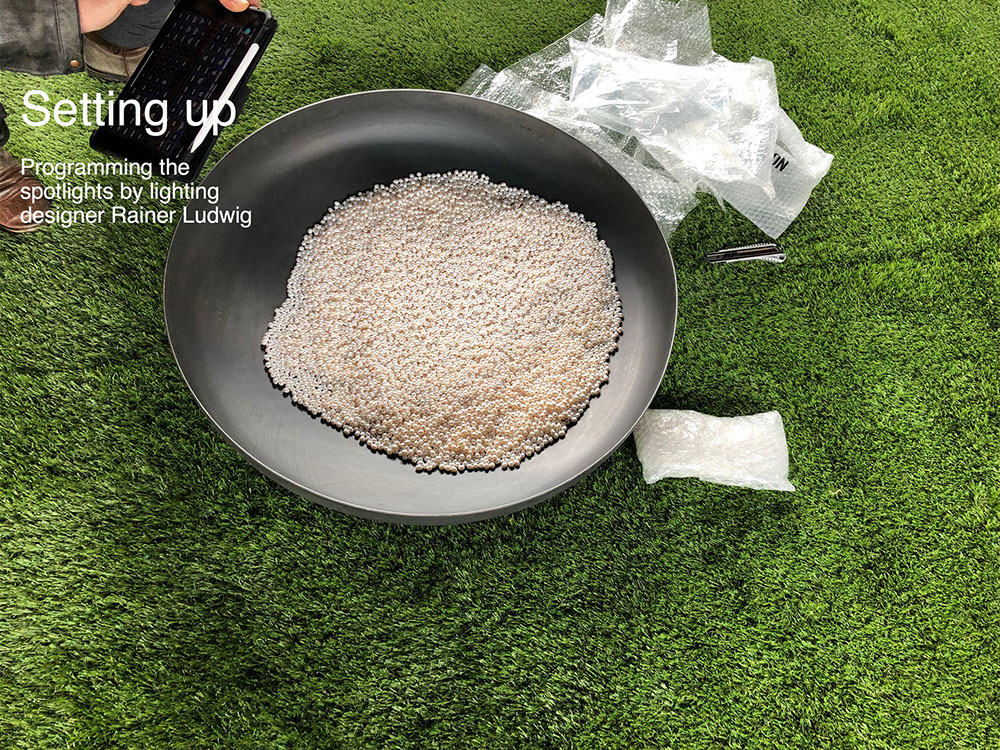
The real pearls in the fire bowl are all equally valuable and yet each one is different. The pearl is a symbol of the soul. Each visitor can choose their own bead and take it with them. In this way, the pearls spread throughout the world as a ‘Poem of Pearls’, as what remains of the installation together with the memory.
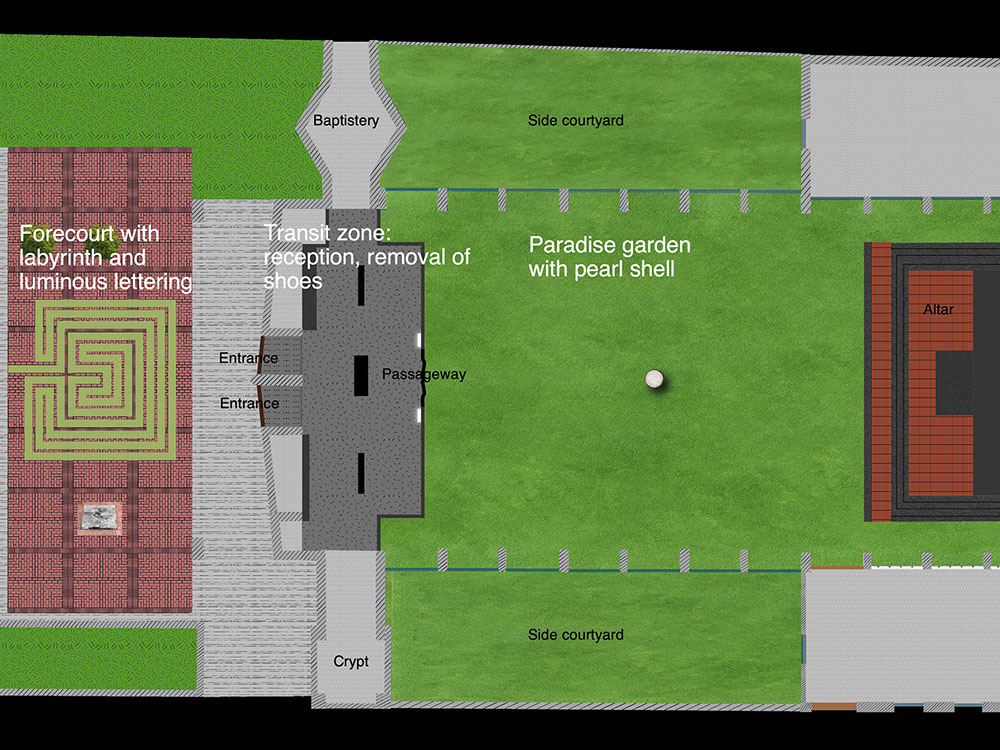
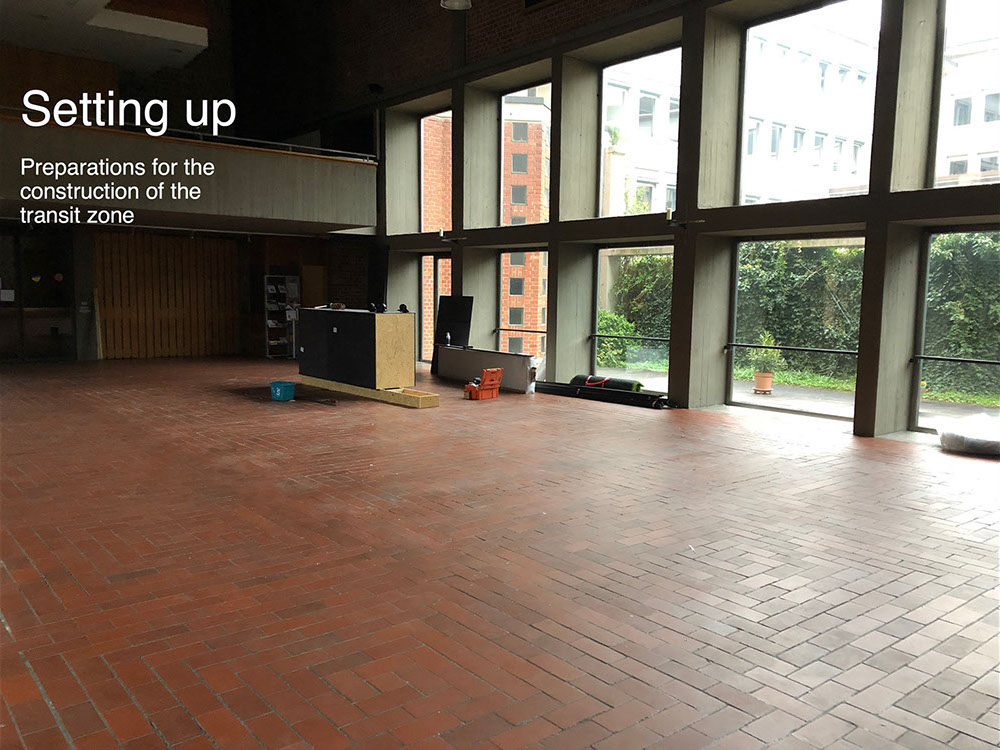
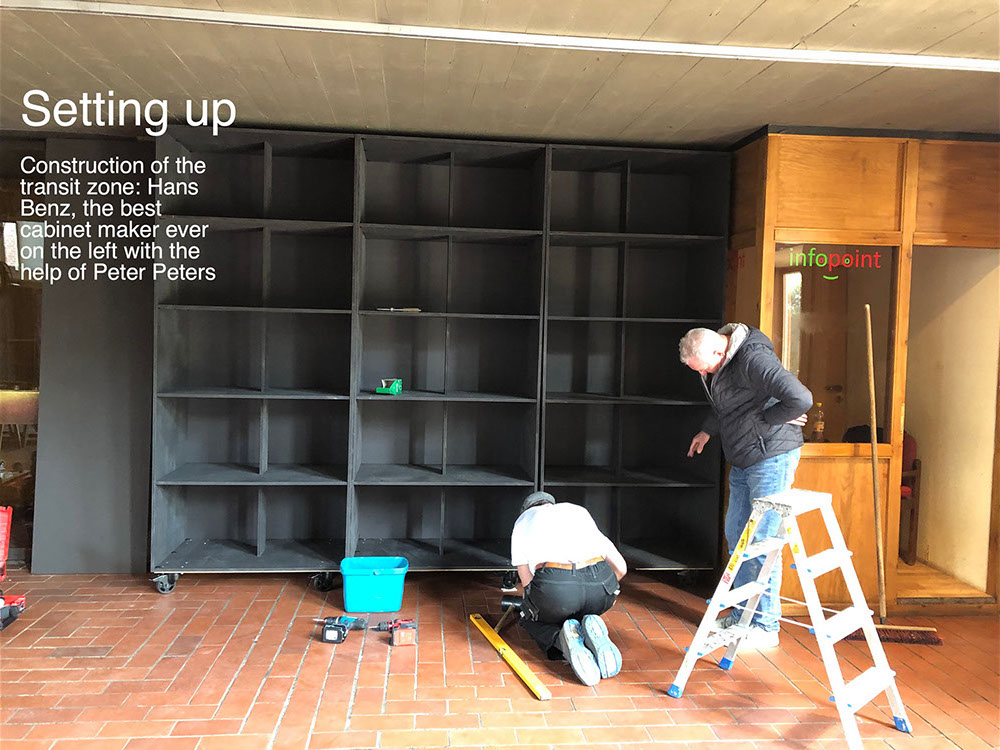
The Paradise Garden is not directly accessible. The first step is to walk through the labyrinth on the forecourt, an ancient symbol for travelling to another world. The dark transit zone just behind the entrance door is a kind of airlock. Visitors take off their shoes here and then step into the light and quiet Hortus conclusus. A very subtle scent of the sea and vastness pervades the room, the pearls' reminder of their origins in the sea.
Hessischer Rundfunk, Interview Gohlke, June 8, 2021:
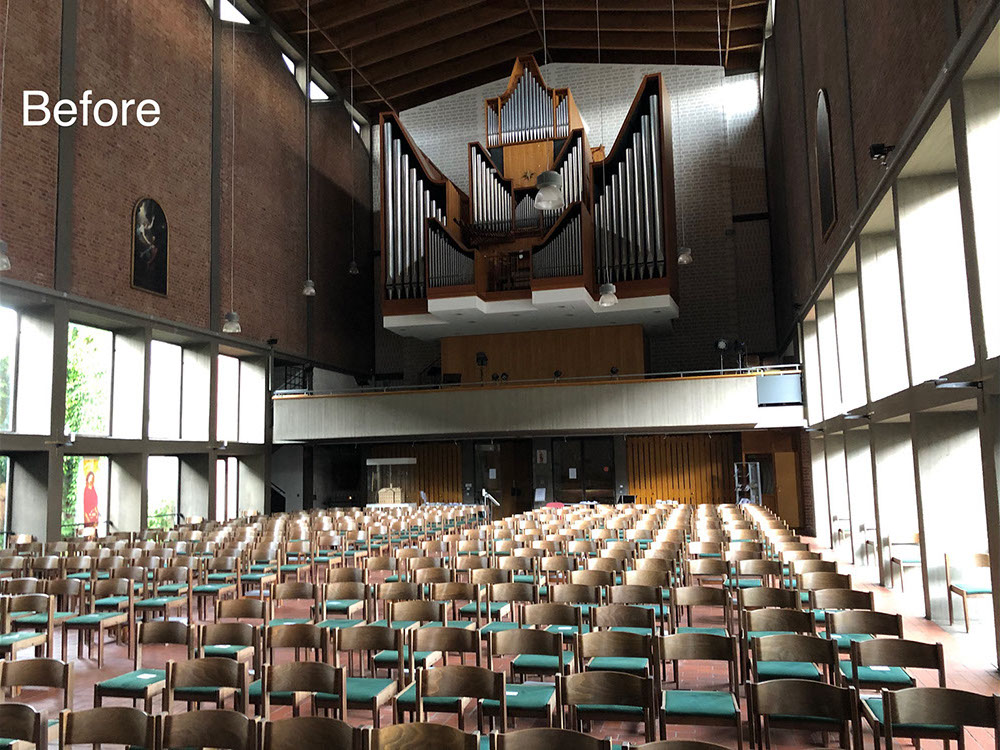
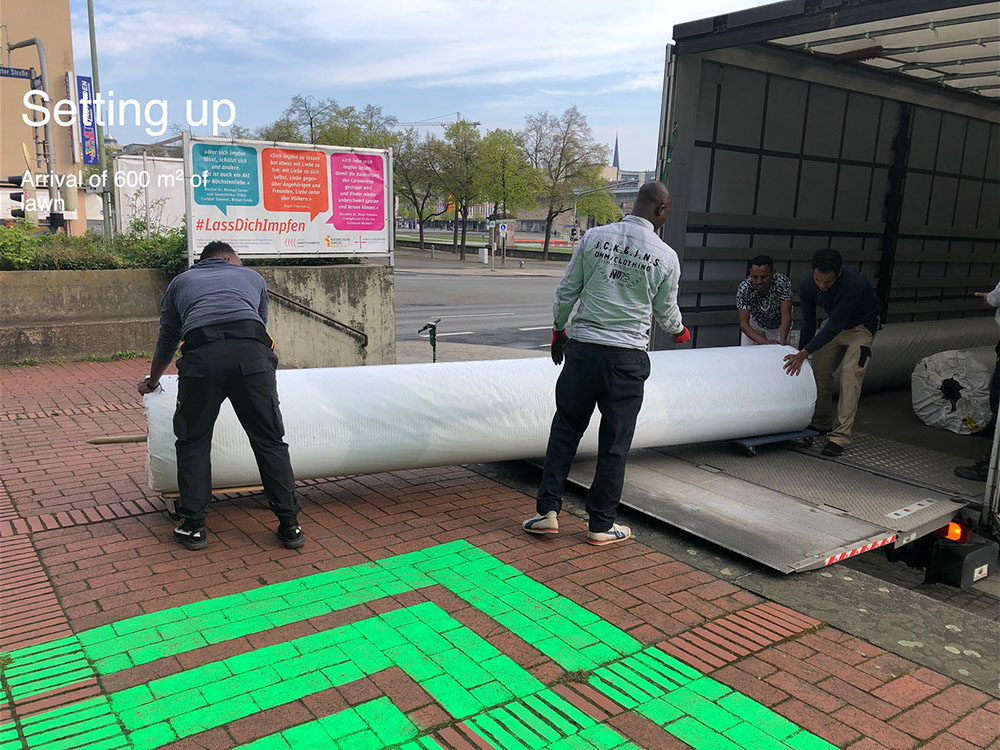
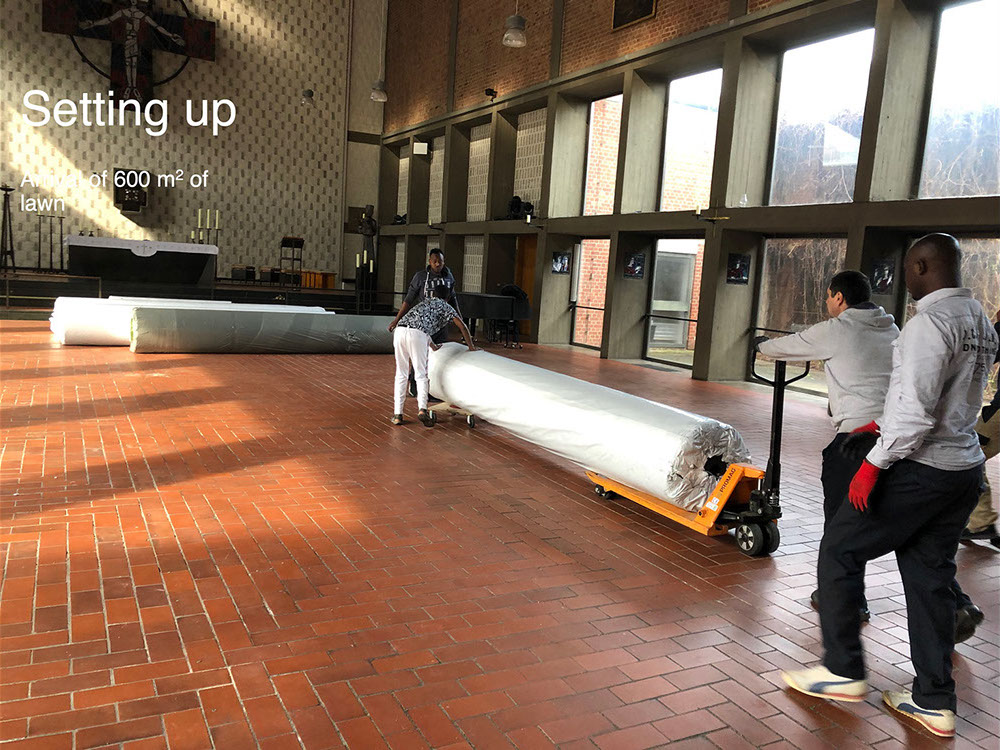
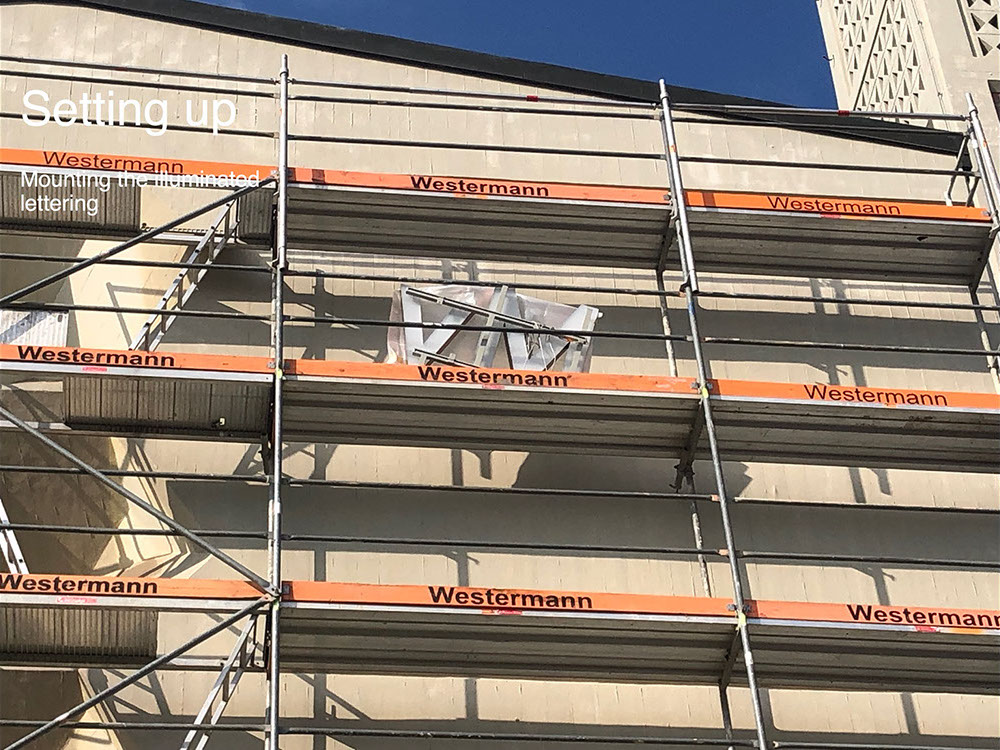
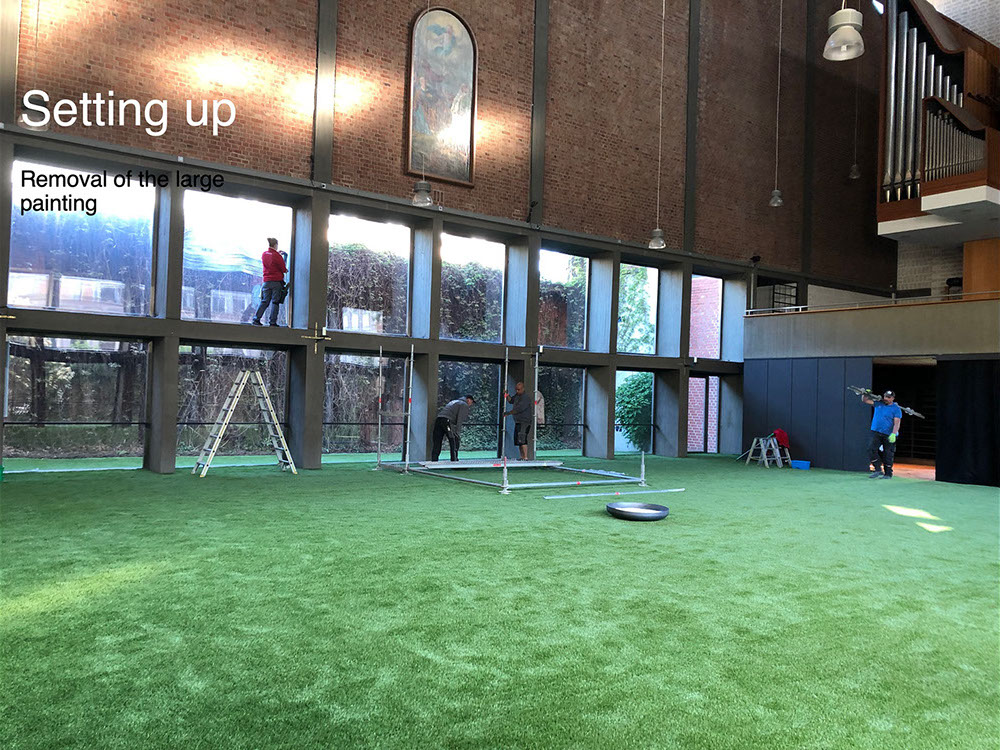
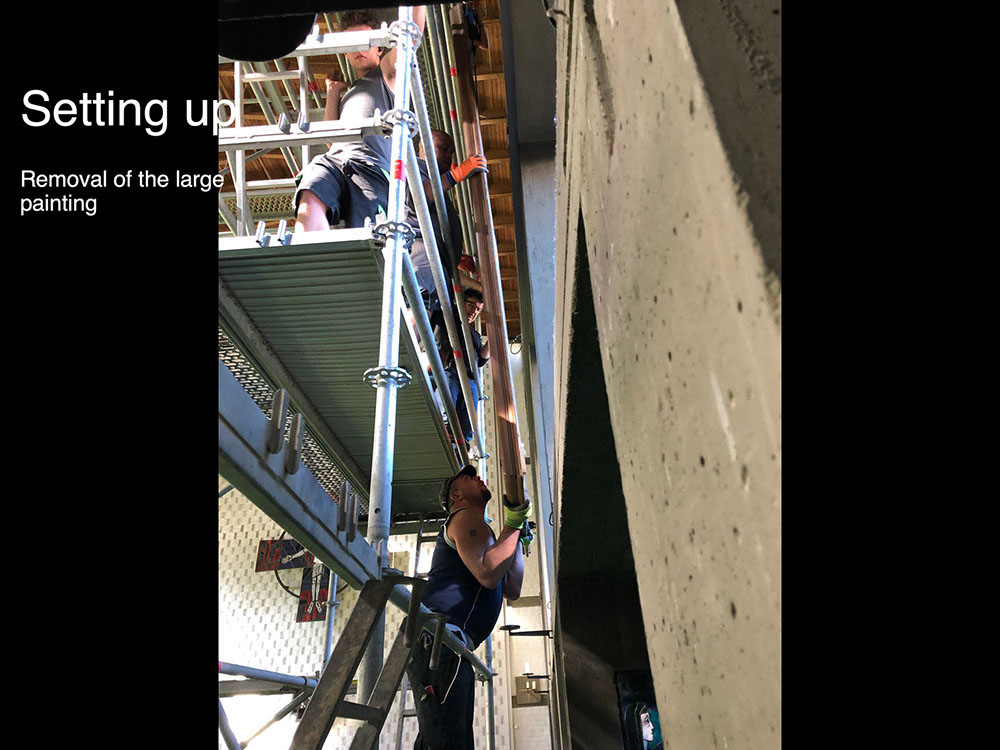
Poem of Pearls: The installation | Before | Making off































Impressions from the guest books, spoken by Kerstin Leitschuh and Jan Uhlenbrock, produced by Kerstin Leitschuh
Martin Matl about Poem of Pearls, translated excerpt from a magazine article in "das münster" 3, 2022
Birthe Blauth presents her project Poem of Pearls in the Elisabethkirche in Kassel in the summer of 2022. In a series developed since 2002, artists are invited every five years to design the church space at Friedrichsplatz with their idea. With this contribution, the Catholic Church opens its doors to a documenta audience traveling from all over the world and to all those in the diocese of Fulda and beyond who are interested in the dialogue between art and church.
The concept for "Poem of Pearls" for the Elisabethkirche in Kassel can be described on several levels. During the presentation of ideas, Birthe Blauth provided her title with an extensive glossary of the terms pearl - paradise - hortus conclusus - labyrinth, thus opening up a field of symbols and narrative traditions rich in associations that crosses religious, spatial and temporal boundaries throughout human history. The theme - quite provocatively set in the current everyday reality of church closures and abuse processing - was thus outlined.
On a second level lies the typological analysis of the churches planned and built by Armin Dietrich in the years 1959-60, with cross-references to other buildings of the era. The architecture of the Elisabethkirche is developed out of constructive necessities and follows the brutalist idea of showing raw and simple materials. Birthe Blauth recognized the coherence of the interior with the two garden courtyards as a defining structure, so that the longitudinal walls of brick and glass do not represent an exterior wall, but rather the central nave wall of a three-nave basilica with two side aisles without a roof. This play of permeability and boundaries is also characteristic of the longitudinal axis of the church. The forecourt is followed by an entrance area under the gallery, the nave and the chancel.
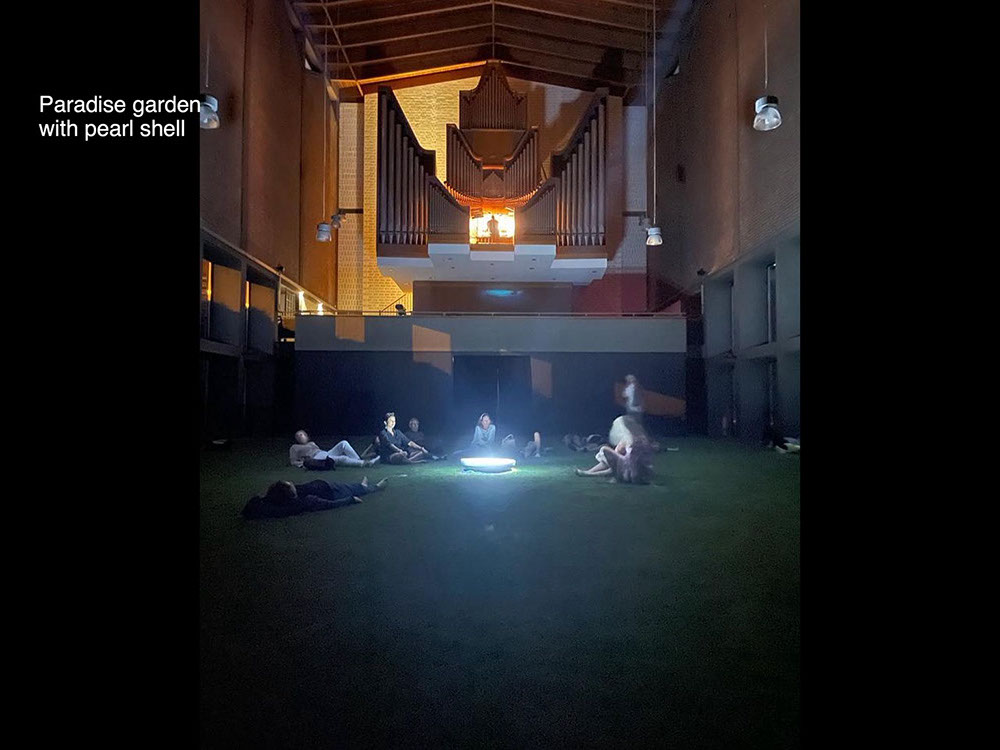
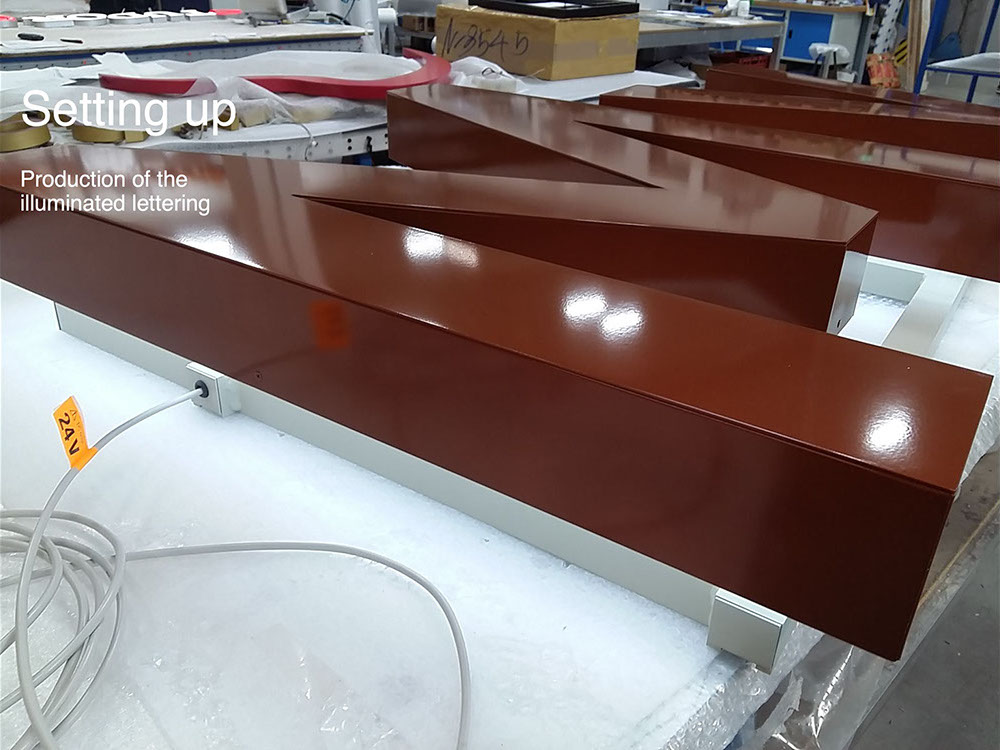
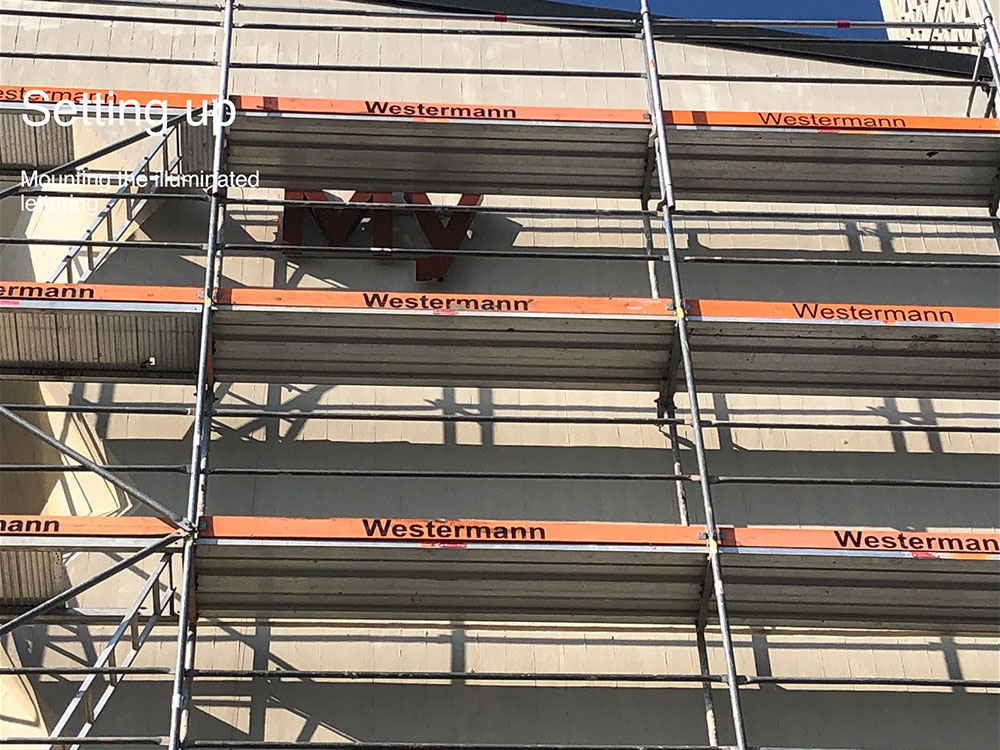
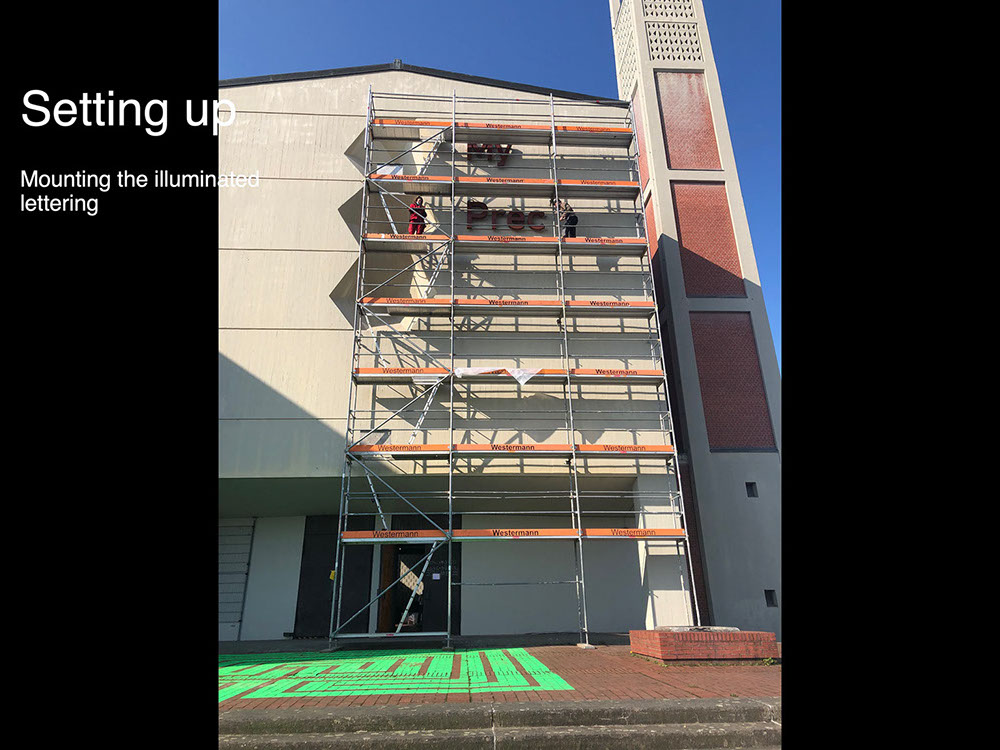
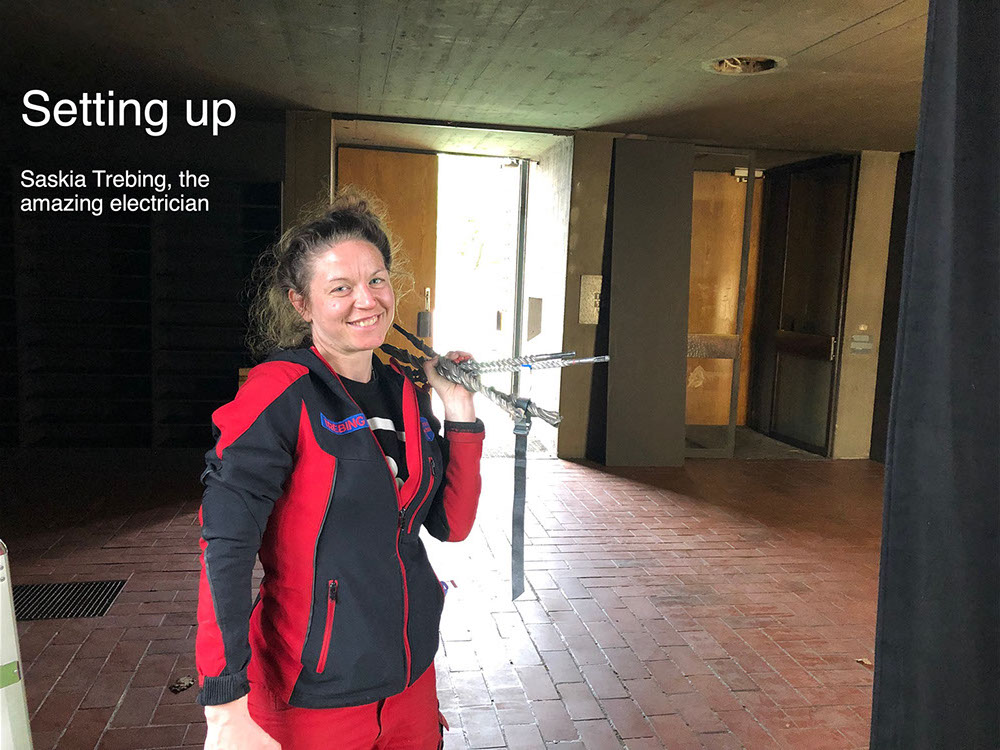
Birthe Blauth elaborates these structures in the design of her installation - the third level of the concept. On the entrance façade is a lettering that has a far-reaching effect on the urban space: "My Precious Pearl From Paradise". The area of the forecourt is designed by a painted labyrinth in green color. The entrance area under the gallery of the church was separated from the main room by a wall. This space, kept dark, serves as a transition zone, filtering the traffic noise of the street and welcoming the visitors. In the main nave of the church, artificial turf is laid out that extends into both side courtyards, giving the impression of a continuous floor across the entire width, which also connects to the landscaped boundary walls of the courtyards. In the midst of this grassy green area is a fire bowl filled to the brim with natural beads. From the chancel of the church, except for the principals, all kinds of furnishings were removed, it otherwise remained unchanged.
On the fourth level, the first three are joined by the visitors to form a participatory installation. The journey to paradise begins with walking the labyrinth in the forecourt. In the transit zone, shoes are taken off. Those who wish can take a folding chair into the interior. The usual church seating has been removed for the duration of the installation. The interior now invites people to find a place, to sit down on the grass, to perceive the silence alone or in community, to choose one of the beads and to take it home. The idea that after the completion of the project, through the hands and pockets of the visitors, the beads from the Kassel Paradise Garden are distributed all over the world, is for the artist another level of the project.
The installation "Poem of Pearls" raises, as the preparation phase and the first weeks after the opening have shown, some questions that can be fruitful in the further discussion, especially in the context of art in the church. The presumably only diffusely existing image of paradise in the church space becomes very concrete here. To use artificial turf for the paradisiacal green lawn in the church is a risk in times of eco-balancing and the longing for authenticity. And it is, in all clarity, the contemporaneity placed in the space and the demonstration of a spatial atmosphere designed with human means. The effect of the silence in the room and the immaculate greenery is enormous. Not only the wagtails in the two courtyards seem to take the artificial paradise seriously. The effect is so strong that it must be discussed whether anything other than devotional silence can be tolerated in this space at all. Is the church space now more sacred than ever or even sacrosanct? For open-minded Christians, who have laboriously fought for acceptance of "normal" behavior in church over decades, this is a provocation. Agnostics with an affinity for art, on the other hand, seem to understand immediately that this is about devotion. What should a work of art in a church space do if not ask this question: What can a sacred space mean today and what can it trigger? In linking the vague with the precise: a great deal.
Christoph Baumanns talks with Birthe Blauth, June 4, 2022, St. Elisabeth Kassel. Video by Marcus Leitschuh.
Catalogue Poem of Pearls with texts by Christoph Baumanns, Birthe Blauth, Michael Gerber and Peter Zürcher, Martin Matl, Benita Meißner, Heinz Schütz.
German and English. Translation by Melanie Girdlestone. Photos by Johannes Seyerlein. Design, production BANKTM.
Edition Braus, Aufbau Verlage GmbH & Co. KG Berlin. ISBN 978-3-86228-238-8
Kutzer/Müllner/Reese-Schnitker (Hrsg.)
Heilige Räume. Verständigungen zwischen Theologie und Kulturwissenschaft.
In the chapter "Zeitgenössische Kunst in Heiligen Räumen", p. 165 - 192, my installations "Poem of Pearls" (2022 in the church St. Elisabeth in Kassel during documenta 15) and "Eternity" (2024 in the central church Unser Lieben Frauen in Bremen) are discussed.
Kohlhammer Verlag 2024, ISBN 978-3-17-042503-3
Guest books with entries from visitors of Poem of Pearls in St. Elisabeth in Kassel during documenta, >> Book 1 >> Book 2